How to Write a Successful Funding Application for a Bocce Court
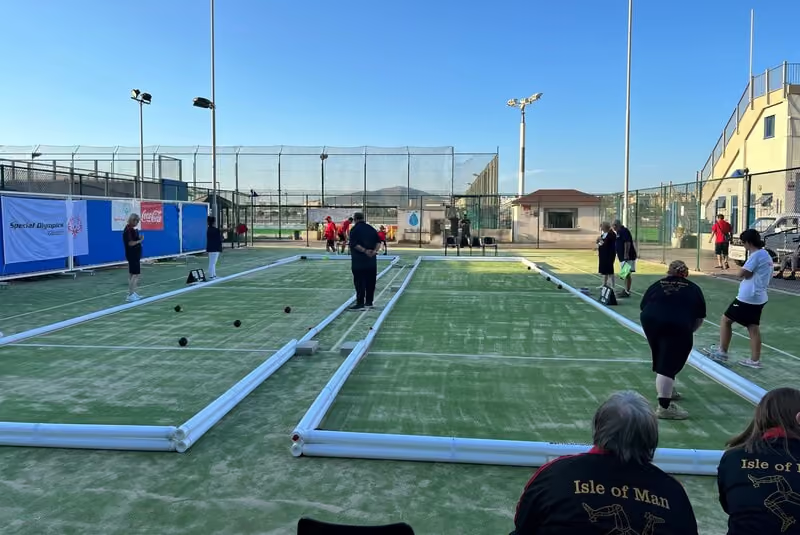
A bocce court can be much more than a place to play sport.
It can create opportunities for people of different ages and abilities to be active together, give Special Olympics athletes a place to train and compete, provide an accessible social activity, and turn an existing community space into somewhere people can connect.
Those wider benefits can also form the basis of a strong bocce court funding application.
Whether you represent a Special Olympics programme, sports club, school, community organisation, retirement community, local authority or charity, the key is to avoid making your application simply about purchasing equipment.
A successful application should explain:

why your community needs the project;
who will benefit;
what barriers it will help remove;
what measurable difference it will make; and
why the project represents good value for the funder.
In other words:
The bocce court is what you purchase. The community outcome is what you are asking the funder to invest in.
Here are ten ways to make that case more effectively.

1. Start with the need – not the bocce court
One of the easiest mistakes to make in a funding application is starting with the solution.
For example:
“We would like funding to purchase a bocce court.”
That tells the funder what you want, but not why they should support it.
Instead, begin with the people or community need you are trying to address.
Your community might have:
limited accessible sporting opportunities for people with intellectual or physical disabilities;
a growing Special Olympics programme without a suitable place to train;
few activities where people of different ages and abilities can participate together;
a need for more low-impact, inclusive physical activity;
limited opportunities for social connection among older people or people with disabilities;
existing indoor or outdoor spaces that could be used more effectively; or
demand from schools, clubs or community groups for additional recreational opportunities.
Once the need is clear, the bocce court becomes the solution.
Instead of:
“We would like funding to purchase a bocce court.”
Try something closer to:
“Our community currently has limited opportunities for people of different ages and abilities to participate together in an accessible sporting activity. Establishing a bocce programme will allow us to provide regular inclusive recreation, including training and competition opportunities for Special Olympics athletes.”
One statement asks a funder to pay for equipment.
The other asks them to help solve a community need.

2. Explain why bocce is a good solution
Do not assume the person assessing your application already understands bocce or its benefits. Take a few sentences to explain why the sport suits your particular community. Bocce is relatively simple to learn and can be played socially or competitively. It can also accommodate people with a wide range of ages and abilities.
Depending on your programme, participants might include:
children and young people;
adults;
older people;
people with intellectual disabilities;
people with varying levels of mobility;
Special Olympics athletes;
families and mixed-generation groups; and
social and competitive players.
That means one bocce facility can potentially serve several parts of the community. This is an important point to make when demonstrating value for money.
If you are still considering the type or dimensions of court required for your programme, Packaworld's bocce court size guide explains the typical settings for competition, recreation and smaller courts.

3. Talk about outcomes, not just activities
Funders usually want to know what will change because of their investment.There is an important difference between an activity and an outcome.
An activity might be:
“We will run weekly bocce sessions.”
An outcome explains why those sessions matter:
“Weekly bocce sessions will create regular opportunities for people with and without disabilities to participate in sport together, develop friendships and become more involved in community activities.”
When preparing your application, ask:
If this project succeeds, what will be different twelve months from now?

Activity
Run weekly bocce sessions

Outcome
Build friendships, inclusion and participation
Possible outcomes might include:
more people participating regularly in physical activity;
increased participation by people with disabilities;
greater social connection;
improved participant confidence;
more opportunities for Special Olympics athletes to train and compete;
greater interaction between people with and without intellectual disabilities;
increased use of an existing community facility;
more volunteers becoming involved in community sport; or
stronger partnerships between schools, clubs, disability organisations and community groups.
These outcomes give a funder a much clearer reason to support your project.
4. Make inclusion part of the story
Bocce has the potential to bring together people who might not otherwise participate in the same sporting activity.
If inclusion is an important part of your project, explain exactly what that will look like.
For Special Olympics athletes, for example, a bocce programme can provide opportunities for competition, physical activity, skill development, social interaction and confidence.
Your project could create:
a place where people with intellectual disabilities are active and visible members of the sporting community;
opportunities for athletes to develop their skills;
regular opportunities for friendship and social interaction;
ways for families, volunteers and supporters to participate;
pathways from recreational play into organised competition; and
activities in which people with and without intellectual disabilities participate together.
If you plan to run Unified Sports or other inclusive programmes, say so.
The stronger question is not simply “Who can use this court?”
It is:
“Who currently faces a barrier to participating, and how will this project help remove that barrier?”
For more background on bocce and Special Olympics, see Packaworld's bocce resources and community stories.

5. Provide evidence that people want the project
Avoid relying on statements such as:
“We believe the community will be interested.”
Evidence is more persuasive than assumption.
Depending on your project, useful evidence might include:
current membership or participation numbers;
numbers of Special Olympics athletes who could use the facility;
expressions of interest from schools or community organisations;
letters of support;
feedback from athletes, participants and families;
results from a simple community survey;
waiting lists or demand for existing activities;
evidence that suitable facilities are unavailable locally;
commitments from partner organisations to use the court; or
volunteer support.
You do not necessarily need a major research project. A few strong pieces of local evidence can be extremely effective.
For example:
“Our Special Olympics programme currently has 34 athletes, with 18 regularly participating in bocce. The nearest suitable competition facility is approximately 40 minutes away, which limits our ability to provide regular training.”
That gives the funder a specific problem their investment can help solve.
6. Show how the court will be used
A funder may reasonably ask:
“What happens after we pay for it?”
Answer that question in your application.
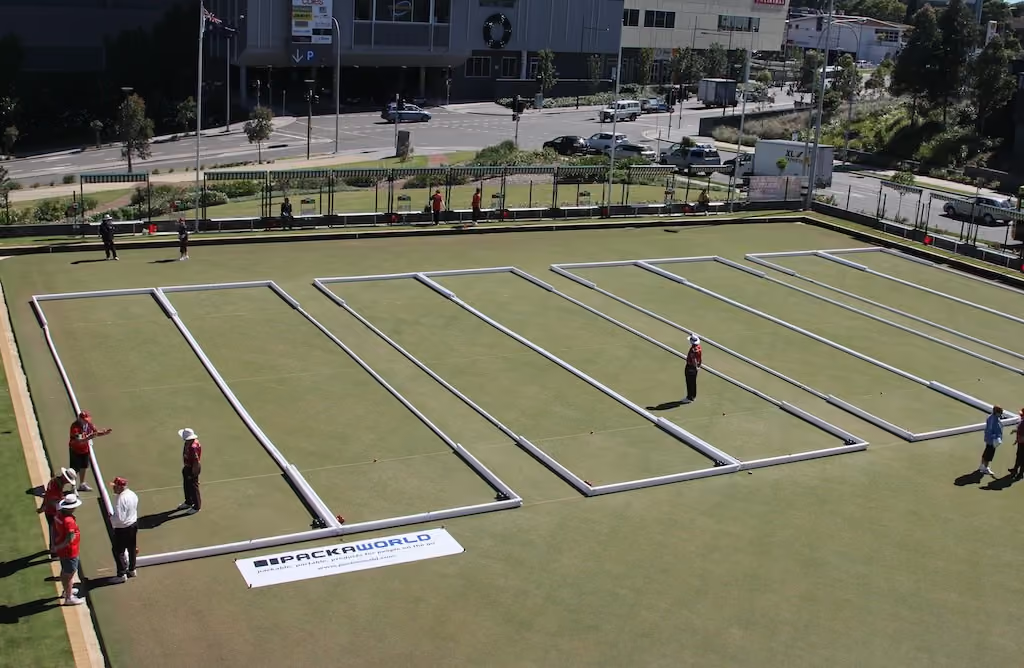
Describe the expected use of the facility. For example:
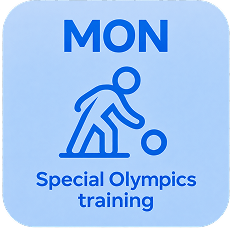

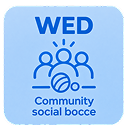

Your programme does not need to look exactly like this.
The important thing is to demonstrate that you have thought beyond the purchase itself.
If multiple organisations intend to use the facility, name them where appropriate.
Shared use can strengthen an application because the benefit of the investment extends beyond one club or organisation.
It may also affect the kind of court that best suits your programme. If you are deciding between permanent infrastructure and a court that can be moved between schools, halls, sports centres or events, see our fixed versus portable bocce court guide.

7. Put numbers around your impact
Statements such as:
“This project will benefit the whole community.”
may sound positive, but they are difficult for a funder to evaluate. Specific and realistic targets are much more useful.
For example:
“During the first year, we aim to provide at least two organised bocce sessions each week and introduce 80 people to the sport, including at least 25 participants with intellectual disabilities.”
Possible measures include:
number of participants;
number of participants with disabilities;
number of new participants;
number of sessions delivered;
number of schools or community organisations using the court;
number of volunteers involved;
number of competitions or community events hosted;
participant satisfaction; and
percentage of participants returning regularly.
Your targets do not need to be enormous.
They need to be credible and measurable.
Including them also shows the funder that you have thought about how you will evaluate and report on the project.

8. Demonstrate value for money
Funding organisations usually have limited resources and many worthwhile projects competing for them.
Help the assessor see why your proposal represents good value.
Explain:
how many people will benefit;
how frequently the court will be used;
how many organisations could access it;
the expected useful life of the equipment;
whether volunteers will contribute time;
whether your organisation is contributing financially;
whether materials, venue hire or services are being donated;
whether you are seeking funding from other sources;
whether the equipment can support competitions or community events; and
whether it can be used across multiple locations.
If volunteers, partner organisations or sponsors are contributing resources, consider including those as in-kind contributions where the funding programme allows it.
They demonstrate that your community is already invested in making the project work.
Think about the playing environment too. Bocce can be played on a variety of suitable surfaces, and choosing an existing surface rather than constructing an entirely new dedicated area may affect the overall project budget. Packaworld's guide to bocce playing surfaces explains some of the common options.

9. Give the funder confidence you can deliver
A worthwhile idea still needs a credible organisation behind it.
Briefly explain why your group can successfully deliver and sustain the project.
You might mention:
previous community projects;
experience running sports programmes;
coaches and volunteers;
partnerships with Special Olympics, schools, clubs or community organisations;
existing programmes and participants;
the people responsible for managing the project;
how equipment will be stored and maintained; and
how ongoing programme costs will be covered.
You do not need to include your organisation's entire history.
Give the assessor enough information to feel confident their investment will be used effectively.

10. Use the language of the funder
Read the funding criteria carefully before writing your application. Different funders may prioritise areas such as:
inclusion;
accessibility;
community participation;
physical activity;
wellbeing;
social connection;
youth development;
healthy ageing;
reducing barriers;
community infrastructure; or
supporting people with disabilities.
If those priorities genuinely apply to your project, explain the connection clearly. For example:
“The project will reduce barriers to participation by providing an accessible sporting activity that can be enjoyed by people with a wide range of physical and intellectual abilities.”
Do not simply copy sentences from the funder's website. Use evidence to show how your project will actually deliver the outcomes they are seeking.
What not to say in a bocce court funding application

AVOID
"We deserve the funding." Funding is usually competitive.
"Everyone will use it." Unless you have evidence, this sounds unrealistic.
"There is nothing like this anywhere." Absolute statements can be risky unless you can substantiate them.

BETTER
Demonstrate impact rather than entitlement.
Identify the groups you expect to participate and provide reasonable estimates.
A stronger version may be: “There is currently no suitable publicly accessible bocce facility within our immediate community.”
Four other mistakes to avoid
1. Focusing too much on equipment
Court specifications and costs are important, but they shouldn't dominate your application. Funders are generally more interested in the people who will benefit and the positive changes your project will create. Make community impact the focus of your story.
2. Using jargon
The person assessing your application may know very little about bocce or Special Olympics. Use clear, straightforward language and explain any unfamiliar terms. Your goal is to make the benefits of your project easy to understand.
3. Making exaggerated claims
Avoid promising outcomes you cannot realistically deliver or measure. A modest claim supported by evidence is much more persuasive than an ambitious statement you cannot substantiate.
4. Sending the same application to every funder
Different funding organisations have different priorities. Tailor each application to show how your bocce project aligns with the particular funder's objectives, whether that's inclusion, community wellbeing, accessibility or participation.
A simple formula for writing your funding story
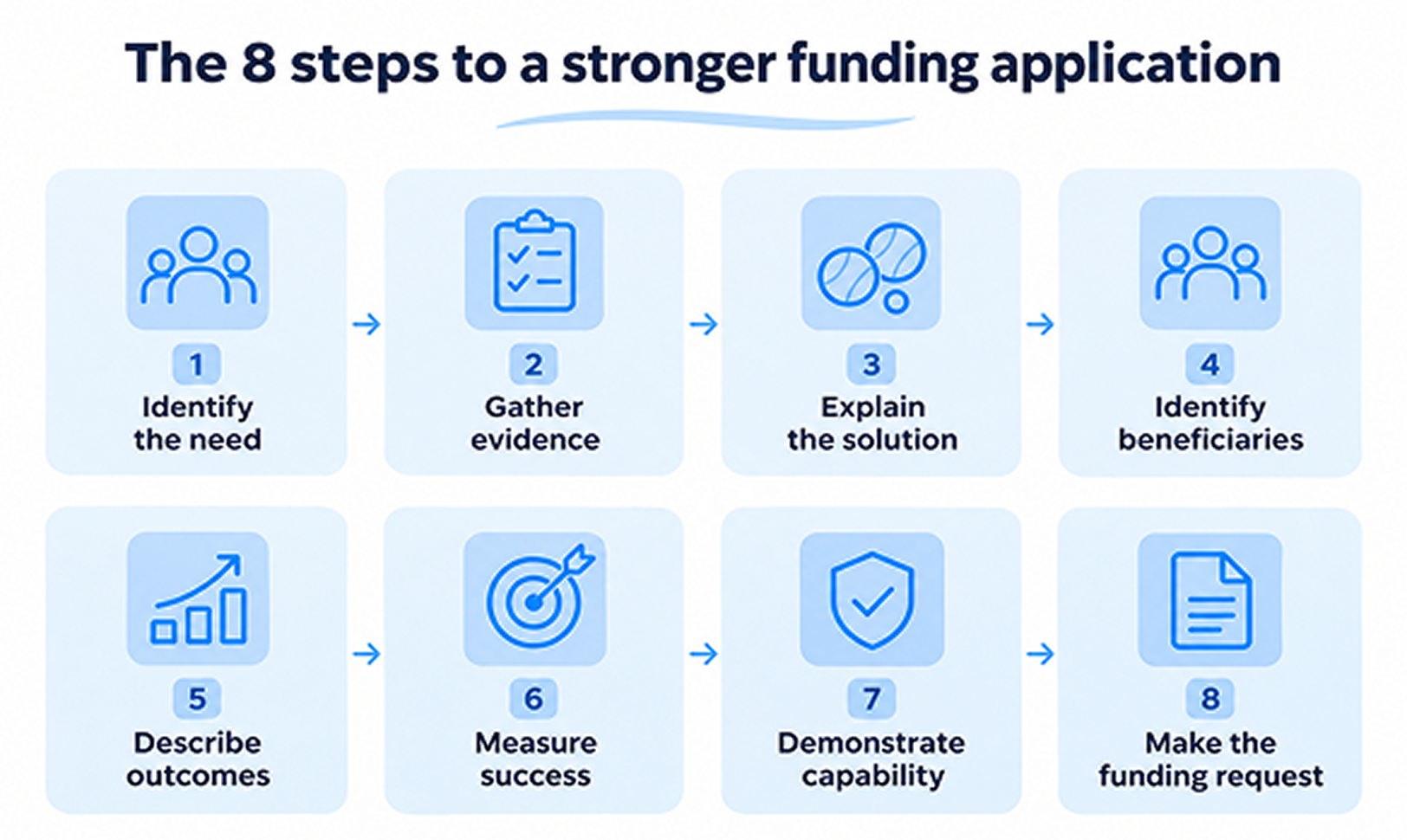
Use this sequence as a practical checklist. Start by identifying the community need and gathering supporting evidence. Explain how your bocce project will address that need, who will benefit and what outcomes you expect.
Then show how you'll measure success, demonstrate your organisation's ability to deliver the project, and finish with a clear explanation of exactly what funding you are requesting.
Illustrative funding application example
Less effective
"Our club wants to buy a bocce court because bocce is becoming more popular. The court costs $10,000 and would be a great addition to our facilities."
Stronger
"Our community has limited opportunities for people with intellectual disabilities to participate regularly in accessible sport alongside their families and the wider community. Working with local athletes, volunteers and community organisations, we plan to establish a dedicated bocce programme providing weekly training, social sessions and opportunities for competition.
The new court will be available to our Special Olympics athletes as well as local schools, older adults and community groups. During the first year, we aim to introduce at least 100 people to bocce and establish a sustainable weekly programme supported by trained volunteers.
Funding will enable us to provide the court infrastructure required to turn an underused community space into an inclusive sporting facility with ongoing community benefit."
The stronger application succeeds because it explains the community need, identifies who will benefit, describes the expected outcomes and demonstrates why the project is worth funding.
A good funding application answers five essential questions: Who needs this? Why? Who benefits? What will change? And why should we fund it?
Before you submit your application
Ask someone who is not closely involved in the project to read your application. Then ask them:
Do you understand the problem we are trying to solve?
Do you understand why bocce is an appropriate solution?
Is it clear who will benefit?
Can you see what positive difference the project will make?
Are our targets believable and measurable?
Would you feel confident giving our organisation the money?
If an answer is unclear, revisit that part of the application. Finally, check that you have:
answered every question;
met the funder's eligibility requirements;
supplied every required document;
included an accurate project budget;
obtained any quotations required;
included letters of support where useful; and
submitted everything before the closing date.
Remember: fund the outcome, not just the court
Perhaps the most useful principle is also the simplest. Do not make your application solely about buying a bocce court.Make it about what that court will enable.
A place where a Special Olympics athlete can train.
A place where someone who has never considered themselves sporty can participate.
A place where an older person can meet new people.
A place where a child and grandparent can play together.
A place where people with and without disabilities can share the same court, the same game and the same sense of achievement.
The bocce court is what you purchase.
The community impact is what you are asking the funder to invest in.
Ready to put your bocce project into action?
A strong funding application needs a clear project plan and a realistic budget.
If you're considering a portable bocce court, Packaworld can help with product information, court sizes, specifications and pricing to support your funding proposal.
Take the next step towards bringing bocce to your community. Or explore our Packabocce portable bocce courts to find an option that suits your programme.