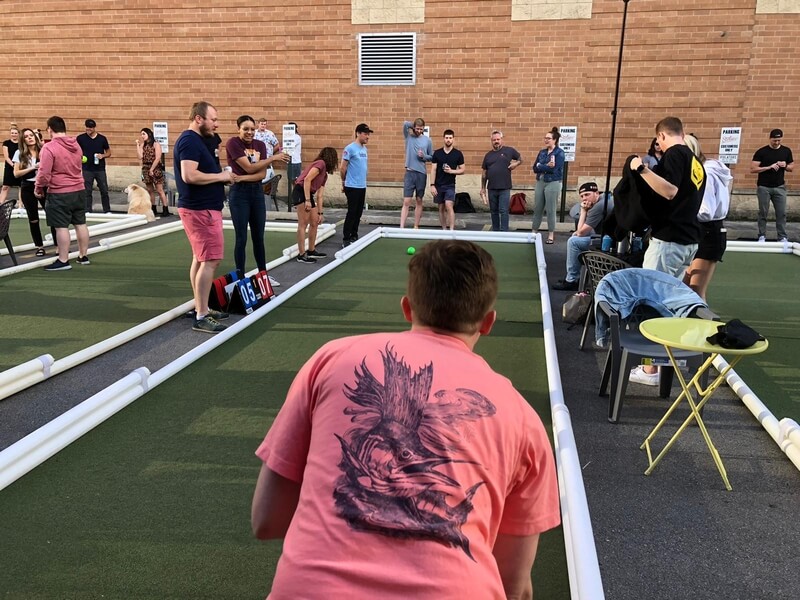
Court markings
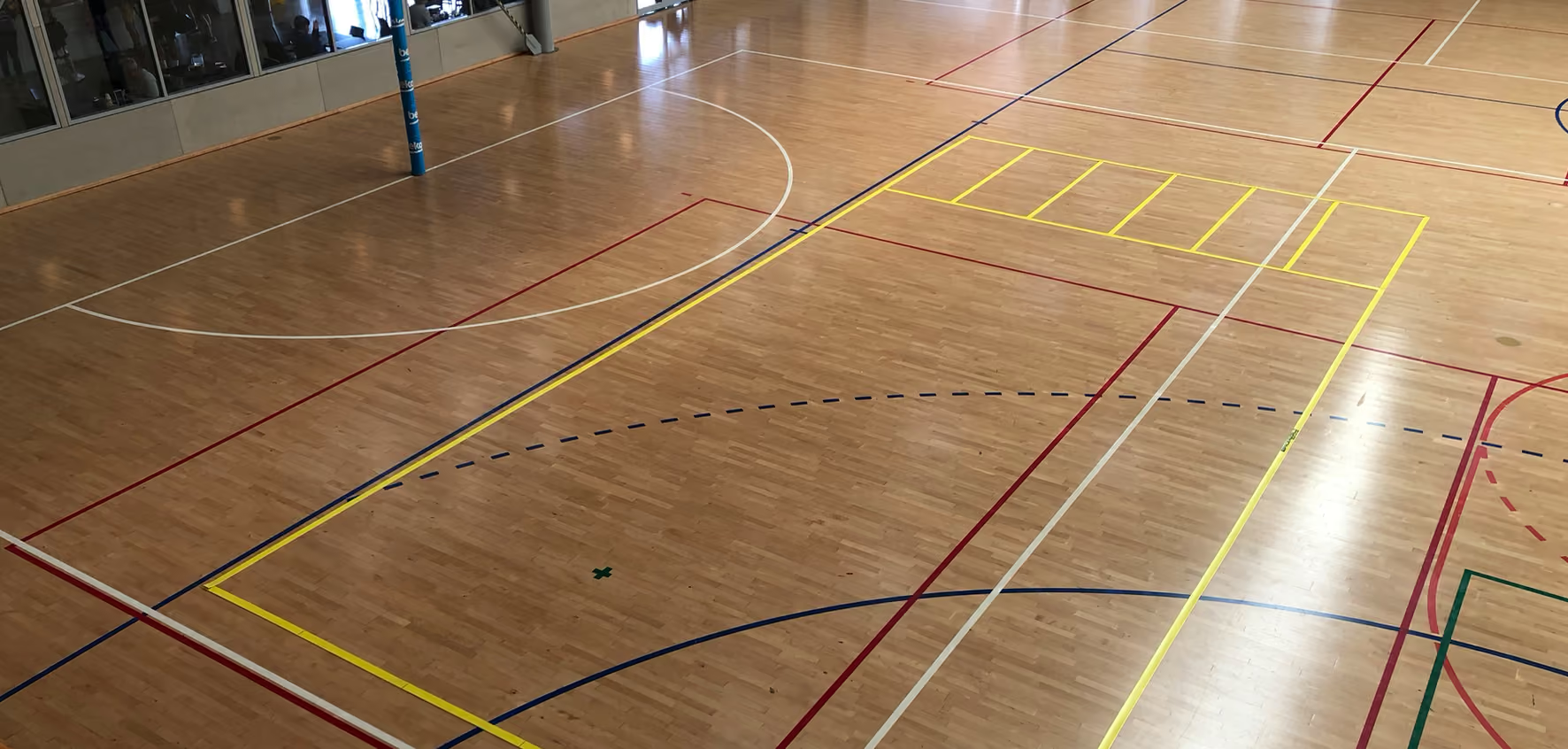
The challenge
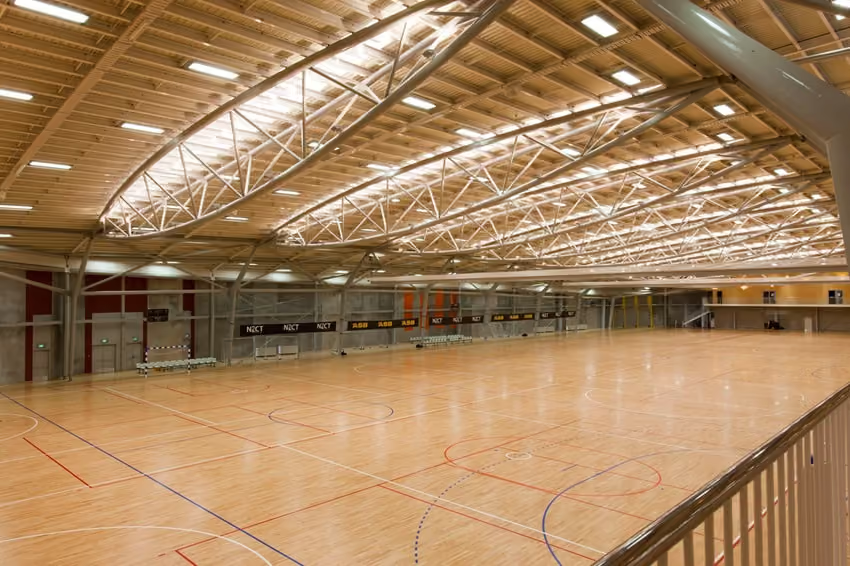
The growing popularity of boccia and other inclusive sports is placing increasing pressure on leisure and sports facility managers to cater for new court and playing area set ups.
In some cases marking these out using conventional methods can be time consuming, while in others it may not be possible at all due to the damage line marking tape can do to gymnasium floors. As a result, people playing indoor sport are often forced to play on make-shift courts with incorrect line markings.
Sports arenas and leisure centres are expensive assets, which is why so many facility managers ban the use of temporary court marking tape on their surfaces. A lot of things can happen, and none of them are good:

line marking tape can pull up any lines or decals that have been painted on the gym floor, or
peel away layers of the floor’s surface finish making the floor look scruffy and unprofessional.
Removing the surface paint/finish and exposing the wood can also result in additional chipping and peeling of the remaining paint or finish in adjacent areas. In addition, most commonly available tapes contain adhesive resins that can etch or stain the floor finish or even the wooden flooring below the temporary markings.
The solution
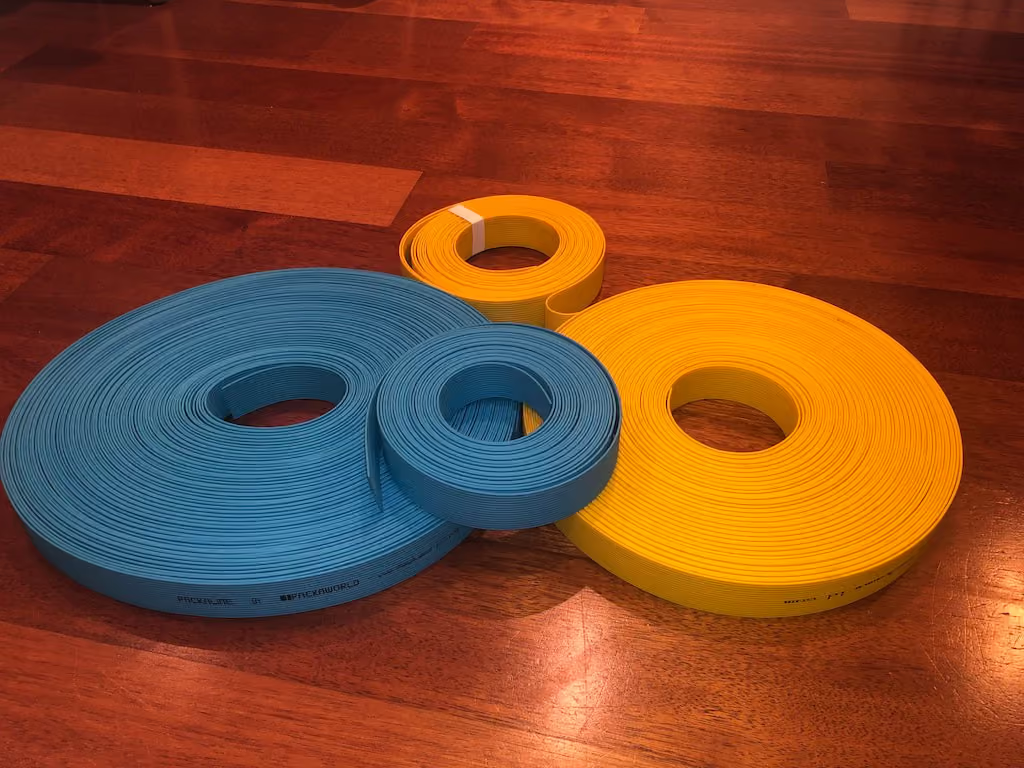
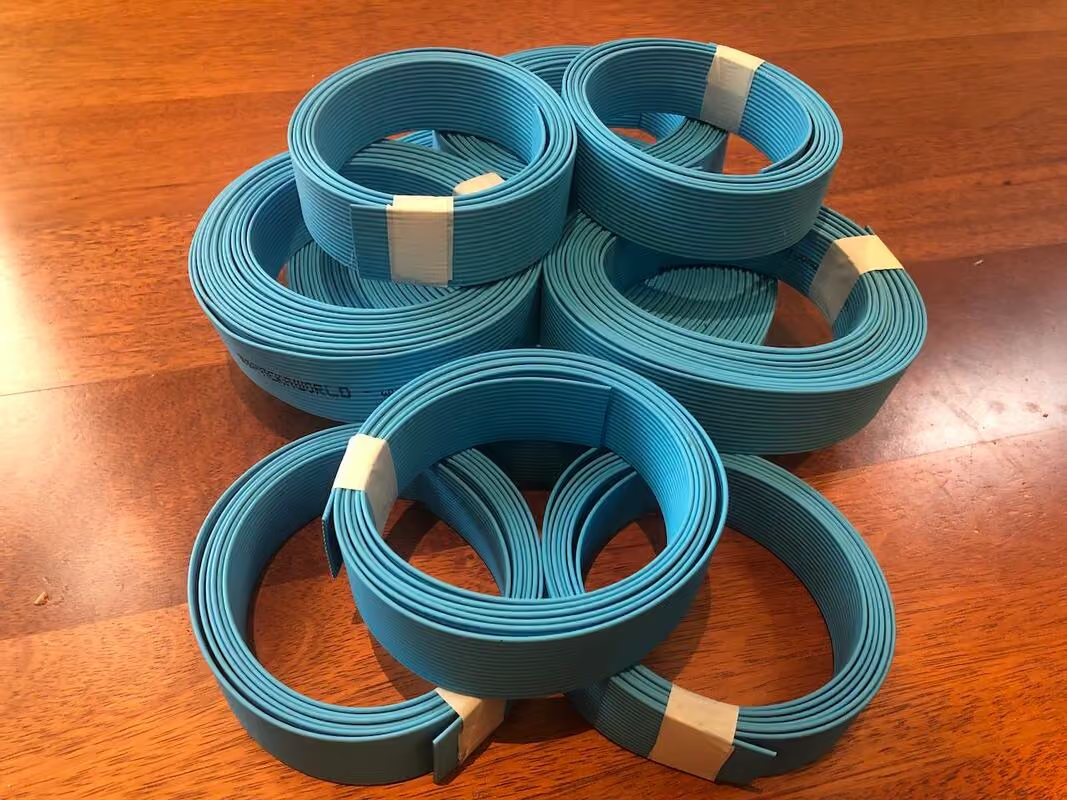
Packalines are temporary line markings, available from Packaworld, that are easy to set up and avoid damage to sports hall floors. Packalines come in 196.8 ft (60m) and 32.8 ft (10m) reels, are 1.6in (40mm) wide and 0.086in (2.2mm) thick (making them a low trip hazard) and available as standard in light blue to provide maximum visibility against wooden flooring (other colours are available for orders over 1,200 metres).
The special grade rubber is UV stable, and does not age or fade over time. Its high tack finish and grooved profile ensure the temporary court lines stay flat on the court surface, remaining in position even when walked on or traversed.
The Packaline sets were originally developed to mark temporary court lines for the the sport of boccia - an inclusive sport which is particularly popular among players with disabilities and is also played in the Paralympics. However, they have also been used to provide temporary line marking for other sports, such as pickleball, badminton and volleyball, in situations where no other line markings are available.
Some key features and benefits of Packalines
The multi-purpose Packalines are easy to transport and fast and simple to set up. The Packalines are supplied, un-cut, in 60 metre and 10 metre reels which allow them to be easily cut to size to provide temporary court lines for a range of different sporting codes. The growing popularity of boccia and other inclusive sports is placing increasing pressure on leisure and sports facility managers to cater for new court and playing area set ups.
Unique high-tack 'special grade rubber' compound with a ribbed profile that grips the court
Easy to lay down – courts ready in seconds
Easy to cut to length, so can be used for a wide variety of sporting codes
Use what you need
Memory function ensures they remain flat on the court
Suitable for most indoor wooden court finished surfaces
View our five different court configurations
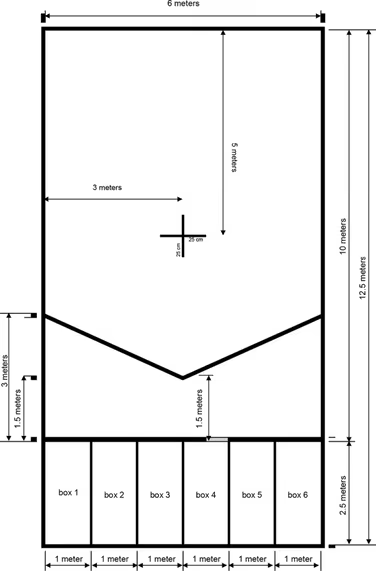
Boccia
Specification:
Back line (x1) - 6m each
End of court line (x1) - 6m each
Throwing line (x1) - 6m each
Side of court lines (x2) - 12.5m each
Dividing Lines (x5) - 2.5m each
V – Line (x2) - allow approximately 3.1m for each (see note below)
TOTAL LENGTH OF PACKALINE REQUIRED = 62 metres (approx.)
(requires 1 x 55m and 1 x 10m reels of Packaline)
Note: alternative option is to use ribbon or tape marking for the V-line instead of Packaline which provides a flatter line to cater for those players with slower boule throws (e.g. ramp players). In which case only 56m of Packaline is required.
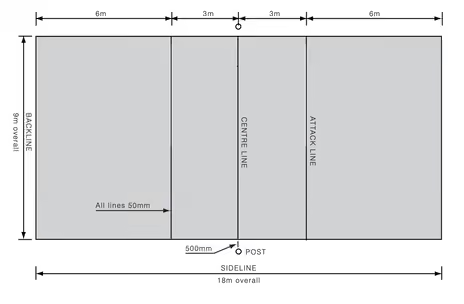
Volleyball
Specification:
Side line (x2) – 18m each
Back line (x2) - 9m each
Attack line (x2) – 9m each
Centre line (x1) – 9m each
TOTAL LENGTH OF PACKALINE REQUIRED = 81 metres (approx.)
(requires 1 x 55m and 3 x 10m reels of Packaline)
Note: If no attack or centre lines are required then this reduces the Packaline requirement down to 63 metres and therefore you will only need 1 x 55m reel and 1 x 10m reel
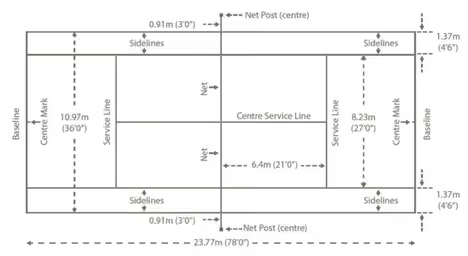
Tennis
Specification:
Baselines (x2) - allow 11m each
Sidelines (x4) - allow 24m each
Service lines (x2) - allow 8.5m each
Centre service line (x1) - allow 13m
TOTAL LENGTH OF PACKALINE REQUIRED = 148 metres (approx.)
(requires 3 x 55m reels of Packaline)
Note: Alternative Packaline configuration could be used (using 10m reels) BUT care must be taken when laying out lines and cutting. Safest bet is to use 3 x 55m lengths which will provide spare capacity if mistakes made.
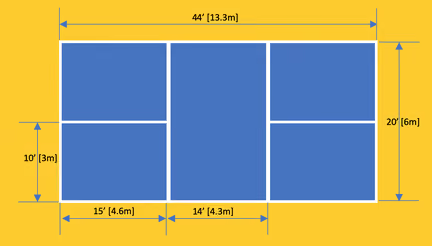
Pickleball
Specification:
Side line (x2) – 13.3m each
Service line (x2) – 6m each
Base line (x2) – 6m each
Centre Lines (x2) – 4.6m each
TOTAL LENGTH OF PACKALINE REQUIRED = 60 metres (approx.)
(requires 1 x 55m and 1 x 10m reels of Packaline)
Badminton
Specification:
Side line for doubles (x2) – 13.4m each
Side line for singles (x2) -13.4m each
Short Service line (x2) – 6.1m each
Long Service line for doubles (x2) – 6.1m each
Long service line for singles (x2) – 6.1m each
Centre Lines (x2) – 4.72m each
TOTAL LENGTH OF PACKALINE REQUIRED = 100 metres (approx.)
(requires 2 x 55m of Packaline)


How easy can it be?
Easy and quick to set up, Packalines provide endless opportunities to bring the game of your choice to a place near you. Check out the time lapse video below to see just how easy it is...
Are Packalines right for you? Key considerations
Packalines are an ideal solution to mark out temporary areas of play in indoor settings where permanent line markings do not exist.
Please remember:
Packalines were originally designed to mark playing areas for boccia - an inclusive sport for wheelchair-bound athletes with disabilities.
Some people have also used Packalines to provide temporary line markings for other sports. However, please keep in mind that Packalines are temporary markings. They do not typically move when stepped on but will move if kicked during play, and may need to be re-positioned.

View related posts
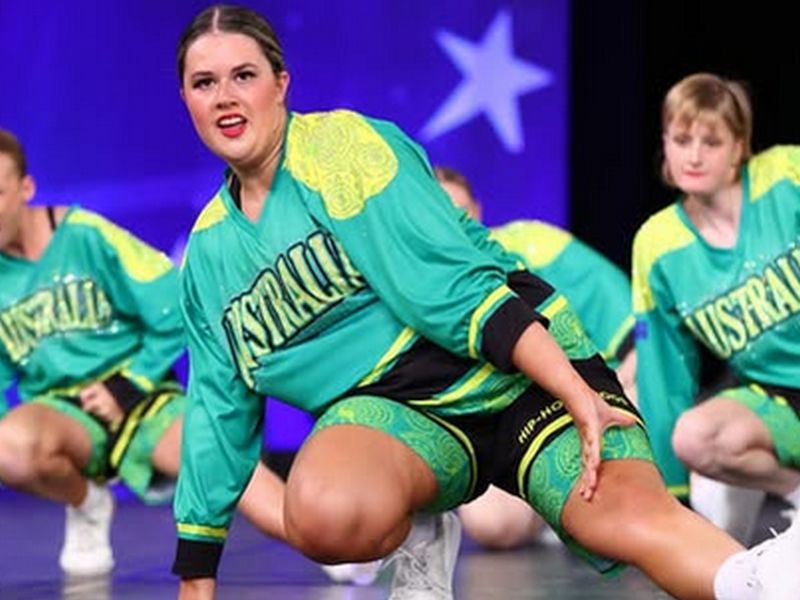
Packalines support Australian all abilities team’s historic hip hop win
Australia's all abilities hip hop Team stunned the competition at the recent ICU World Cheerleading Championships to claim gold in their first-ever attempt, supported by...

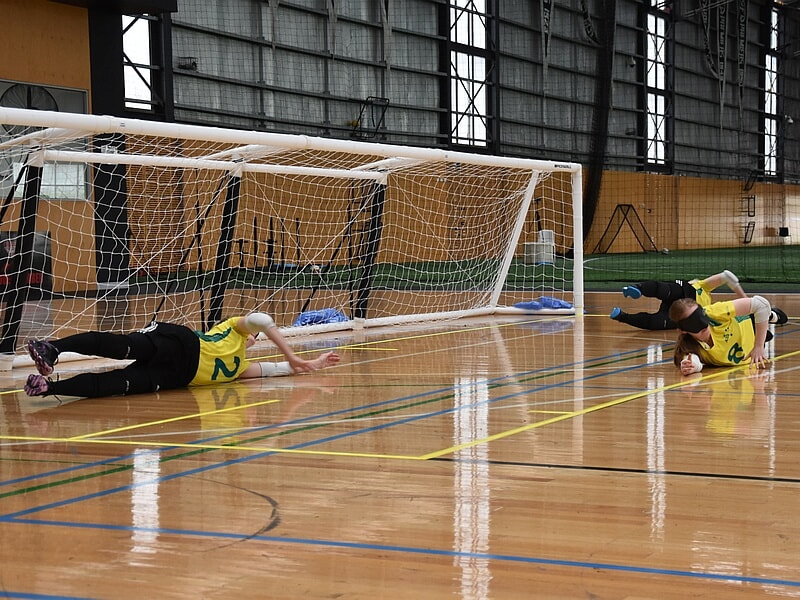
Beyond the Paralympics: Growing disabled sports with portable goals and courts
The Paralympic Games in Paris have the world’s sports fans enthralled with the determination, ability and will to succeed of all the amazing athletes taking...